Welcome to NakedTomatoes

All about tomatoes, heirloom and home grown.
With a bit extra thrown in about Brugs and bread, growing and baking, and other semi-relevant thoughts. And maybe a few recipes.

Thursday, January 24, 2008

A Brief Intermission for Bread


Haven't baked anything in a while, but today I realized we were low on bread, I had time, and didn't want to run to the grocery store. And everyone, including my lil' miss I don't like crust, likes this bread. So here it is, in all it's glory. I only ate three slices, fresh out of the oven. Two slathered with butter, the third with a tangy old cheddar. Yum!

It's your standard recipe, very simple, flour, water, yeast and salt, so I won't post it. Besides, I am a by-your-eye kind of baker too, so I don't really measure to close. You can just tell by the feel of the dough, when it's ready for the next stage.

Monday, January 21, 2008

Starting from Scratch......or Seed - Part One


It's a tad early for starting seeds of anything yet unless your trying your hand at wintersowing, but I really start to get itchy fingers near the end of January. I don't start tomatoes until late March or Mid April, 6-8 weeks before my last frost date. So I decided perhaps if I write about it, that may scratch the itch for a little bit. And what else would come after choosing your tomatoes? Besides waiting for the seeds in the mail, that is.
I do have one little Galina happily growing in a pot under a lamp light, sitting right beside my desk on a shelf . I must check on her at least 5 times a day. Spring really can't come fast enough!

Starting your own tomatoes from seed is pretty straightforward. The three first key ingredients for germination are soil, water and heat. And once they've popped their noses out (germination), the fourth key is light. There are all kinds of fancy set-ups you can buy, and if you're creative, you can make some pretty slick outfits yourself. But whether you're growing a few plants for yourself, or a few hundred, you don't need to spend a lot of time or money. When I get my set up out of the shed, and actually working, I'll be sure to post some pictures. It's pretty simple and didn't cost me much.

What type of container you start your seeds in is entirely up to you and would also depend on how many you plan to start. I use the plastic cell packs that fit perfectly into the nursery trays, but small pots, even styrofoam cups are perfectly fine if you're not going to start that many. I start them off in the cells, and once they have a true set of leaves (or to be honest, probably longer), I pot them up into larger 4 inch pots. I start a few hundred plants, though, so for me this is the easiest way. And I am obsessive about checking them a few times a day, at least. If you are not the type of person who obsesses over plants, a larger starting container might be better, because they will not dry out as quickly.

So now for the soil. You can buy perfectly fine, very expensive seed starting mix, or you can make your own. Guess which one I do?

Of course I make my own. It's part of the fun! I use regular black earth (cheap at Canadian Tire, or other stores), vermiculite, perlite and peat moss. The ratio is approximately 1/2 earth, 1/6 each vermiculite, perlite, and peat moss. I kind of eyeball it, don't bother measuring it out. If I have good compost around, I'll add some of that too. I mix it all up in a big bucket, and then fill up the cell packs. Now water the mix in the cells, making sure it doesn't get too wet. If that happens, just let it dry out a few days before you plant the seeds. Now I'm ready to plant!

We'll get to that next time!

Sunday, January 20, 2008

Choosing the right tomato - Part Two


So by now I have added at least a dozen new heirlooms that I want to try. Gardeners are beyond generous when it comes to sharing seeds, and promoting their favorites. I don't even get a chance to whip out the credit card when I am perusing seed catalogs online, because I know that most of these varieties are being grown by others who are more than willing to share. But it also makes narrowing down my list even more difficult. I have to be stern and tough with myself, and throw in a little realism as well. I only have so much room!! I have two large raised beds, and a smaller square one, in which I'm supposed to contain all my vegetable plants. All other beds are perennials, or awaiting my brugmansias come spring. I did try to grow some in front of the front hedge this summer, but that wasn't quite the success I was hoping for. One neighbor did comment on the nice tomatoes, but....I think he was just being nice. So that spot is going to be for brugs in sunken pots.

So, back to trying to choose tomatoes. The biggest thing is that this family uses tomatoes in almost any way possible, so we need cherries, slicers, pastes, beefsteaks. I think I'll have room for at least 60 plants, so I may whittle my list a bit, and I may sneak tomatoes into spots where they don't really belong. I figure I can grow about 40 varieties this year, even if some are restricted to one or two plants. I've also got to look into the community garden projects this year. I was too late last summer, but it could be a lot of fun.


Now someone who wants to plan their garden a little bit better than I do should to look at bush vs. indeterminate vs. determinate plants.

Bush tomatoes tend to be shorter plants, that don't require staking. Indeterminates do, as do some determinates. The difference here is indeterminates keep producing throughout the growing season, determinates produce one big flush of tomatoes on the plant all around the same time, and then they are done. In my short growing season, I've never been able to see a difference! I'm sure if you have a longer growing season it would make a difference. I've seen pictures of plants growing well over 12 feet high. I don't think that would be possible here, in my zone 5a (Canadian zone = Zone 4 USDA) but you never know! Maybe if I babied them a little more, I would get bigger plants. But in the end, that doesn't really matter to me. I grow them for fun, so when it becomes too much like work, I tend to lose interest in the process. Gardening should be something to enjoy.

Thursday, November 15, 2007

Choosing the right tomato - Part One

First of all, I don't know if there is such a thing. Everyone's taste is subjective, and the right tomato for Tom could be the wrong tomato for Fred. Having said that, the type of tomato you want to grow will depend on what you want out of that tomato. Are you looking for the perfect BLT sandwich tomato? Cute and tasty little plums for salads? Good canners and salsas and pastes? Lots of meat, lots of juice, lots of seeds, no seeds, etc. There are literally thousands of varieties to chose from, and of course every nursery catalog that lists seeds will tell you every tomato seed they sell is terrific. So how do you choose? And are you willing to put up with the imperfections of growing heirlooms? If not, then maybe you should grow some of the hybrids on the market and stick to the same old same old! But if you want to take a chance on something different and have some fun growing tomatoes, then heirlooms are for you.

There is nothing inherently wrong with hybrids but I prefer heirlooms/open-pollinated for a number of reasons. I like growing yellow tomatoes, and orange tomatoes, and black tomatoes. I like the little itty-bitty ones and the big beefsteaks. I guess I like variety. I should clarify at this point that I class heirlooms and open-pollinated (OP) together, while many others do not. There is no clear definition, and experts will argue the point till they're blue in the face. For simplicity, I put them in the same group because you can save the seeds, and they will grow true year after year. Others will say it is not an heirloom if it hasn't been around for one hundred years, or if it's not endangered, etc...What's in a definition?

I like the fact that you can save the seeds from this year's crop and as long as there has been no cross-pollination, then you are guaranteed to get the same tomato year after year. (There are different ways to prevent cross-pollination, a topic for another post.)

And I love the idea that I am doing my little bit to save rare varieties that we are in danger of losing forever. The big seed companies have no interest in preserving the old varieties, there is no money in it. They want you to buy the hybrids, because you have to keep buying them year after year. There is little point in saving those seeds, because they will not grow true. I am also very opposed to GMO's, and that seems to be the direction most big seed companies and food producers are heading towards with everything that we grow and/or eat. Tomatoes have been genetically modified and sold, although with limited success. I'm sure it's just a matter of time before the supermarket tomato is grown not only with pesticides, herbicides and chemical fertilizers, but will also be genetically modified and successfully sold to the unsuspecting consumer. That is not something I want to eat, nor feed my family. So I am trying to do my part in saving and promoting heirlooms. GMO give me the willies, to be honest.


So at this point, you're wondering where I'm going with this. Here goes:

What type of tomatoes do you want?

How important is production?

How long is your growing season?

What do you want to use the tomato for? (sandwiches, salsa, salads, etc)

How much effort do you want to put in?

Do you want to save seeds?


Keep these thoughts in mind when you're looking through the catalogs. There are lots of places to choose from, but my favorite so far is BakerCreek. I also have a few tomato growing buddies that have shared seed with me, and that is another great way to get them at low/no cost. I've got seeds saved myself, ready to share (hint, hint). As a Canadian, ordering from US companies is perfectly fine, with no problems with customs. I'm not 100% sure, but I think it is fine going the other way as well. Would have to double check.

There are a quite few valuable places to look for seeds, to get ideas, and to find advice. Seeds of Diversity is a living Canadian seed bank for heirlooms, Gardenweb has an excellent tomato forum with tons of advice and opinions. There are lots of good books out there as well.

Well, there is a starting point. I will work on Part Two soon. Lots more to come.

Here is a partial list of what I grew this summer that I will grow again next summer. These are some that I would consider outstanding must grows. Days refers to the number of days from transplanting in the garden until you see fruit.


1. Galina’s Yellow - a delicious yellow cherry, fairly prolific, one of Meg’s favorite Indeterminate, 70 - 75 days. (Siberia/Russian origin)

2. Black Cherry - a tangy, almost smoky, flavorful cherry, another favorite Indeterminate, 65 days.

3. Zigan - black slicing tomato (more of a dark purple, kind of uneven color), smoky flavor, very distinct, medium size Indeterminate, 75 days (Zigan means Gypsy, Russian heirloom)

4 . Stupice - red slicing tomato, small , about the size of a golf ball, but very prolific and early, this was the best tomato in my yard Indeterminate, 50 days. (Czech heirloom)

5. Vova Yellow - smooth, yellow slicer, almost plum shaped, another good producer, nice flavor Indeterminate, 65 days (also know as Uncle Vova’s, Russian heirloom)

6 . Orange Jubilee - another gorgeous orange tomato, baseball sized, good production, good flavor, Indeterminate, 65-70 days

7. Giant Italian Paste - this is the biggest paste tomato I’ve grown, outclassed and outperformed all the other pastes. Indeterminate, 70 days.

8. Rhoade’s Heirloom - a large, bi-color, very unusual looking, didn’t get a lot of the plants, but the ones we did were very nice. Indeterminate, 75 - 80 days.

9. Purple Prince/Black Prince - medium sized dark purple tomato, received one plant in a trade, but saved seeds from it. From what I understand, the same tomato goes by both names (but I could be wrong). Good production. Indeterminate, 70 days.

10. Russian Persimmon - another sweet orange tomato, almost tennis ball size, very nice flavor, Determinate, 75 days

Monday, October 29, 2007

Putting the garden to bed

Frost, and I mean real frost, has finally hit my garden. My valiant tomato plants have bit the dust. I've never had tomatoes this late before. In fact, this has been almost 6 weeks past the usual bite the dust date. Very unusual. But I knew it was coming, so over the weekend, the kids and I pulled out most of the tomato plants in the raised veggie beds, and in the front bed. Now I just have to finish weeding them completely, and I will try an overwintering adaptation of the lasagna bed technique. I used this early spring in one bed, as a trial, and it worked wonderfully. Kept the weeds out like nobody's business.

The basic idea is to smother weeds with newspaper, cardboard, other bio-degradable papers. What I did this spring was to layer compost, overwintered-soon-to-be composted leaves from the previous fall, and general garden waste in the bed, about ten inches or so. I then covered it all with about six to eight sheets thick of newspaper, and then on top of that, three to four inches of garden topsoil/composted lamb-cow-whatever manure. The idea is that the worms will pretty much eat all the garden waste, all the way up to and including the newspaper, leaving you with rich soil, and all the while smothering any weeds. Seemed to do the trick. I wasn't sure how happy the toms would be, in all that not quite composted stuff, but they didn't seem to mind at all. And when I was pulling out the plants, I saw more worms than I think I ever have. A win-win all around. I am going to try the same idea this winter in the other beds, minus the top layer of soil/compost. I'll save that for spring. I'll just add more leaves to the top to keep the newspaper from flying away, and see what it looks like come spring.

Oh, one thing I forgot to add, water the whole thing really well. Up here in Quebec, hopefully we'll get a really good snow cover, but even then, water will help the breakdown of the garden stuff (leaves, compost, etc,) and the newspapers.

Tuesday, October 23, 2007

Hello Tomato Lovers and Gardeners New and Old

I am creating this blog in the hopes of encouraging others to grow and save seeds of heirloom tomato varieties and to record and share my own experiences in my garden with tomatoes and everything else that grows in my garden, outdoors and in .

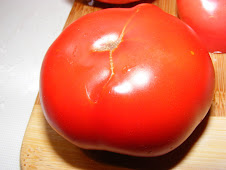
I use the word Naked as opposed to organic, non-gmo, non-hybrid, and other terms, because these are all kind of lumped together, as if they mean the same thing when they don't. I feel the word naked describes the tomato I want to grow. Pure, straightforward, old time strains of tomatoes, bursting with flavor, and all sorts of brilliant colors, these are not your hybrid perfectly round, perfectly bland supermarket tomatoes. These are tomatoes in their glory, blemishes, quirks and all. Grown with natural techniques, using no chemical fertilizing or pesticides.

I will share my growing tips and techniques, from choosing varieties and starting seeds, to lighting and watering, potting up seedlings, setting them out in the garden, bagging blossoms for pure seeds (or if you even need to bother), saving tomato seeds, soil nutrition, composting, and anything else I can think of related to gardening and success with tomatoes. Even if you've never grown a tomato plant, or started one from seed, you can follow along the process, and I bet you'll never go back to store bought tomatoes (except maybe in the dead of winter out of desperation) or buying those hybrids plants again.

I am also a Brugmansia (Angel's Trumpets) fanatic, so I will have the occasional posts and pictures of these beautiful tropical plants.

And I love to cook and bake, so I'm sure that will be there somewhere in the mix.

I hope I will get questions and comments. One thing I love about gardening is the generosity most gardeners have towards others. Walking in my neighborhood last summer, I complemented a woman who was weeding her garden on the gorgeous poppies she had growing, and she promptly cut off a few seed heads and handed them to me. I've had so many generous and kind people share little bits of their gardens and their time with me, I truly believe in the pay it forward philosophy when it comes to gardening.