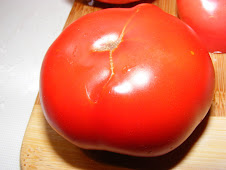
This morning was spent finally, finally, organizing my tomato seeds. Peeling the little seeds off of the paper towels wads that I had thrown into an old coffee tin to keep together until said organizing day. I did manage to save quite a few varieties this year, despite the not so great growing season. I never did bag any of the flowers, so chances are some of them may have gotten crossed. I guess I'll find out next year when I grow them out. If I do trade seeds with anyone, or send seeds, I'll be sure to mention that fact, so other growers will know what they are getting.
Seed list 2008
Box Car Willie
Prudens Purple
Purple Cherokee
Kellogs Breakfast
Black Cherry
Silvery Fir Tree
Jaune Flamme
Bloody Butcher
Meg's Orange Cherry (a Galina X, F2)
Galina's
Japanese Black Trifele
Canabec Rose
Rhoades
Green Zebra
Orange LSL ( a mislabeled or crossed tomato, LongShelfLife it wasn't, but amazingly good)
Vova Yellow
Zigan
Santalina F2
Black Pear
There are a few that seem to have disappeared into the void somewhere. I don't know what happened to Mortgage Lifter, Eva's Purple Ball (I know I saved seeds from it!), Black From Tula, Black Krim (wait, did I even grow that? or just that I wanted to?) note to self: keep better notes!!! As for Hillbilly, Pineapple, Gold Medal, Carbon, Omar's Lebanese, just don't even go there. I have no idea what happened to them.
I still have many seeds left from all the trades I made this year, and lots of saved seed from last year, and some seeds from the Great Tomato Growers,
wonderful people who started me off on my obsessive heirloom tomato journey. They have an incredible variety of tomato seed, and are very generous. I encourage everyone to check out their blog, and follow the links to their lists of tomatoes.
Overall, I am slightly more organized this year. And now that winter is coming, I can't wait to start gardening again. Figures.
I have been waiting for a good oportunity to do a final yard cleanup, and to winterize my roses. I have a few bags of hay to pile up around them this year. I want to finish cleaning up the brug bed and dig in a lot of horse manure to overwinter. I need to plant some garlic that I got this fall from my mom, who bought it from Mennonites at a farmer's market. I hope it's not too late, but I have a feeling I may be really behind with that. I've never grown garlic before, but I love to cook with it, and tend to use a lot so I thought it would be worth a try. Any help there would be appreciated!!
One final note, please contact me if you are interested in any seeds. I am always glad to share them.
Showing posts with label tomato seeds. Show all posts
Showing posts with label tomato seeds. Show all posts
Saturday, November 15, 2008

Saturday, March 1, 2008
Saving Seeds
I'm gonna jump off track here and skip ahead to saving seeds. I was going through my seed inventory, and realized that I have just over 50 varieties of tomatoes now. To some that may seem like a lot, and to others, a piddling amount. Almost half are from the plants that I grew last year and saved seed from, so I decided that was my next topic.
Saving seeds is very simple, but if you really want to be sure that you have a pure strain, and that no cross pollination has occurred, then you have to start the process before the flower on the tomato plants are even open. Cross pollination occurs when one variety is pollinated by another. Most of our varieties are the results of natural crosses, usually done by insects, which have over time become 'stable'. Hybrids are the result of man-made crosses. The offspring of such a cross is an F1 (first generation), and that is what you are buying when you buy a hybrid. You can save the seeds from an F1, which would be F2 (second generation), but you won't get the same plant as the original F1, which is not to say you may not get a nice tomato out of it. And experimenting can be fun. It can get pretty technical, and there's a lot of interesting information out there about tomato breeding, stabilizing hybrid offspring, trying to grow the parents back out, etc, but that's not where I was going with this.
There are a couple ways to ensure the tomato seeds will be pure. Bagging blossoms, maintaining isolation distances, or if you're not interested in saving seeds, but want certain varieties, then make sure you buy from a reputable seller. There are also many traders out there, who take it pretty seriously, and folks who only want to ensure these varieties keep growing, who will give away seeds for the price of a stamp! They are serious about this endeavor, and will most likely have done the work to ensure pure seeds.
Bagging blossoms is your best bet whether you are growing a small or large variety of OP's. You simply cover the flowers before they open, using a light weight material such as cut up nylon from stockings, or tulle. It basically provides a physical barrier to prevent any insects or wind blown pollen coming in contact with the flowers. Giving the flowers a gentle shake is a good idea. Tomatoes are self pollinating, having perfect flowers, which means they contain both the male and female part of the flower. They do need pollen in order to form fruit, but they provide it themselves. Once they have start to form the fruit, remove the bag and identify those particular ones with string or warn, so that you remember to harvest the seeds from those tomatoes. As a home gardener, you don't need a huge amount of saved seed, so a few tomatoes should provide you with enough seed.
So now we'll assume you have the tomatoes that you want to save the seeds from in hand. You chopped them in half and squished out the seeds. They are covered in a gelatinous goo, and you will need to ferment them in order to remove it, which also help in removing any pathogens or bacteria. I use a small kitchen glass, add the seeds and a bit of water, give it a stir and put it on my kitchen windowsill. It only take a day or two, stirred once or twice a day, and they should be done. You don't want to leave them too long, or they may end up sprouting in the water and then they are no good at all. Most of the seed will have sunk to the bottom of the glass. Strain them in a tea strainer, or similar, giving them a really good rinse. Then simply dump them out on a paper towel, fold it up and leave it out to dry. Make sure you label the paper towel, because you will forget what variety they are in a week or two, if you have more than one type on the go. Once they are completely dry, pack them away in a cool dark place. Voila, you have seeds for next year.
Monday, February 4, 2008
Starting from Scratch...or Seed.....Part two
 Anyone who knows me, knows I cannot resist a bad pun! This is my boy, Simon. He is the mellowest fellow, and I adore him even when he is being bad (like getting into my plants). How could I possibly stay mad at that face?
Anyway, back to our regularly scheduled program.........
Planting tomato seed is pretty much the easiest thing in the world. If you've decided to use the cell packs, then simply place one seed in the center of each cell, gently pressing it down just below the soil, and lightly cover it up. If you're using larger pots, you can plant a bunch of seeds in the pots to germinate, and prick them out and transplant once they have grown on a bit. Water very lightly to ensure the seeds are in contact with the soil, and will be able to absorb some of the moisture. Without water, the seeds won't germinate. Don't let the soil dry out until you see the seedlings but don't over-water so that the soil is sopping wet.
Some people use heat mats underneath the trays, or place them on top of the fridge for a bit of bottom heat, which will help speed up the waiting game you will now be playing. I don't specifically use bottom heat, and have never had any problems, but I'm using large greenhouse shelves, that I can close up at night with a light source, which does generate some heat and also retains some moisture. Just be sure that if you use a heat/light source, that it is safe!!! I can't stress that enough! Friends and fellow gardeners have shared many near miss stories, of creative ways they tried to use waterbed heating mats, for example, and nearly burnt their homes down in the process. You may also want to cover up the pots with plastic, or if using the greenhouse style trays that you can purchase, with the domes that come with the trays. Just remember to uncover them during the day, if they are in sunlight, because cooking your seeds will kill them, and that is exactly what will happen if they get too hot under the domes.
Light isn't necessary at this point, just warmth. The ideal temperature should be approximately 25 Celsius (75 F) Germination with tomatoes is usually fairly quick, between 5 -7 days. Once the seeds have popped up, then light does become the number one critical factor in strong and healthy seedlings. I use large shop lights with regular cheap fluorescent bulbs, and a few other lights sources to provide as much light as possible. The seedlings are in my south facing bay windows, so they get as much sun as possible during the day along with the supplemental lighting. The shop lights are hung so close to the seedlings that they almost touch. The one other crucial mistake that is often made, is to over-water the seedlings. Let them get almost to the point of drying out before watering again.
Once they've been growing for a week or two, they should have a second or third set of true leaves, which is a good time to transplant if you are using the large pots/lots of seeds method. If using the cells, then you can leave them safely for a while longer.
One final note, that I should have addressed first, is when to start your seeds. Six to eight weeks before your last frost date is the ideal time to start. If you are an impatient seed starter (as I am) then by all means, take your chances and play around. But remember that the ideal growing condition for tomato plants is outdoors, in full sun. Not very many homes can provide those conditions. And if you do seed early, you may want to try and sow some back up plants at the right time just in case.
Transplanting and trouble shooting.....next time, pardner.

Doesn't she look like she carries a six shooter in her hip pocket??
Mina aka CrazyCalico
Subscribe to:
Posts (Atom)